Platinex Piping Solution: When To Use Lap Joint Flange: A Down-to-Earth Approach
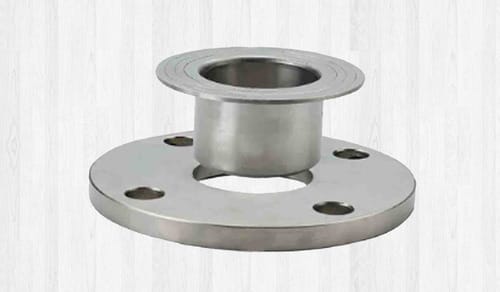
Have you ever been piping and fittings installer in industries? Perhaps you have heard of a lap joint flange. However, it is okay even if you haven’t heard of it because we will uncover it here. LJF is a part that connects pipes firmly by the special flange.
It is of paramount importance to know when exactly and where applicable to apply Lap joint flanges practice for a simple smooth and efficient piping system work. Let us shoulder the burden of the theory and the practice of the lap joint flanges, together!
What is flange with a lap joint?
Lap joint flange could thus be seen as a joint fastener that fits a pipe instead of being directly welded or bolted. This kind of structure makes it really easy to assemble and demount the pipe system.
Lap joint flange has two main parts: the “stub end,” the collar-like part, and the backing flange, the flat plate that is joined with the equipment or pipe. It’s like a jigsaw piece that perfectly holds everything into place.
When use the lap joint flange?
Low-pressure and Non-critical applications
Lap joint flanges, with their low-pressure characteristics, contribute greatly to non-leakage of water by means of feeling good in homes or offices, in case of water supply, and in irrigation systems.
Safety systems which require dismantling and checking every now and then.
The gadgets in the petrochemical and food and beverage industries require periodical exams and repair. In Lap joint flange, it is straightforward to separate parts of the piping system to allow quick inspection, diagnosis, and maintenance when necessary. It helps with the operations that include cleaning, fixing, and checking everything more effectively.
Relieving stress from piping system
This would lead to overwhelming system whenever pipes are large or convey hot volumes. We solve this problem using LJFs. They eliminate stress and easy the pipes from twisting and hence damage and leaks. Use our automatic essay writer to create unique essays for your requirements.
In which situation is the lap joint flanging not used?
High-pressure applications
LJFs could potentially be used in those systems that interact in an environment with high pressure. In such applications Flanges having the harder connections, like Weld Neck Flanges, are most preferred for such applications.
The systems under severe vibration and stress the vehicles point to.
In case the Lap joint flange experiences quite some vibration or movement in the piping system, they might not be the longest-lasting option. Stiffeners with rigid joints shall be used in such zones to assure stability.
Applications with minimal approving leakage were preferred.
In systems are unable to accommodate leaks, Lap joint flange may not be the most appropriate choice. Ring Type Joint Flanges are also other kind of flanges that work better there.
The right process and attention to installation and maintenance is recommended for the operation and proper working of the Lap joint flange.
As for Lap joint flange to function more effectively than they are being used today, therefore, you should install them well and keep them in good state.
Here’s how:
1. Clean the end of the pipe and the interior of HGF pieces.
2. The stick end goes where?
3. Make sure the flange backs are level with the pipe, then, insert the flange over the pipe’s end.
4. Fasten the metallic sticks through those tiny holes to ensure everything remains in place together.
Recommended tightening procedures for bolts:
Tighten the bolts gently and equally moving back and forth or with a crisscross pattern to achieve uniformity and tightness.
Routine inspection and maintenance guidelines: Performing periodical visual control of the lap joint flange for the fatigue, corrosion, or leaks signs.
Lubrication of bolts and nuts, where necessary, to keep assembly is easy to dismantle.
Lap joint flange standards and regulations
This Lap joint flange must satisfy the certain industrial standards to verify their safety and performance. A common accepted standard is ASME B16.5 and ASME B16.47 to establish Lap joint flange. The regulations mentioned above should serve as a guide and all other industry-specific regulations should be followed as well.
Conclusion
Lap Joint Flanges has been proven to be a reasonable and efficient layout making for a secure and adaptive connection designed for pipelines application process. The creation of emission profile for every site when they are connected to the pipe network can help improve the operation essentially.
When you fully consider the DFS specifications like flange thickness, pressure, stress and leakage performances you can, and then know better where the Lap joint flange are most wanted. Everyday pattern of our life taking off from laws and policies, its long-term implications on us remain visible similar to cut crystal.
.jpg)
.jpg)
Comments
Post a Comment