Platinex Piping Solution: How to Choose the Right Blind Flanges for Your Needs
- Get link
- X
- Other Apps
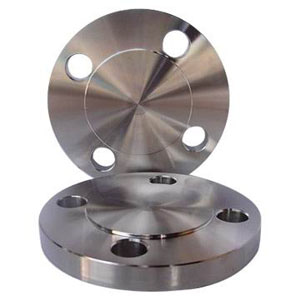
Blinding flanges that are routinely fabricated from steel are developed for sealing off piping ends. They have a role of plugging the top of end of a pipe or valve, thus they form an airtight and secure seal. Additionally, there are many different types of clamps, made of different materials, and with various shapes and sizes in order to suit different needs of tailor-made pipeline systems.
The proper flange selected for a pipeline system helps reliable performance, prevents leakage, and to avoid any danger. In this article, we are going to find out what the numerous reasons for victorious purchase of devices are, providing the system with the desired activity.
CRUCIAL MOREMN STUFF THAT HAS TO BE TAKEN CARE OF BEFORE THE POSITIONING IN THE CORRECT BLIND FLANGES.
While selecting the best equipment for a pipeline system may be an easy task, it definitely requires some crucial factor that should be centered for the optimal performance and safety. These factors include the following:
PIPELINE SIZE AND TYPE
Insuring that the diameter of the flange fits the pipeline size similarly gives a tight and free from leaks seal. A danger of even the smallest distance can result in leaks that require expensive repairs. Certainly this can also bring about the downtime.
Moreover, the choice of the pipe line type also is one of the decisive criterions whether for metal or non-metal flanges are to be chosen. The case flourishes us into technological solutions for example using piping system that carries hazardous fluids with the flanges being built from distinctive material to withstand hostile environments. Pipeline type could also affect the choice of material and style for cover flange. Within this context, pipings and valves for cramped locations operating with high pressure require more robust flanges. On the other hand, a vacuum item that holds liquids needs upwardly projections to its hood that form a seal which is tight.
FLANGE MATERIAL
The kind of material that constructs a flange is very important because it is the one that decides both the component’s strength, endurance, and its resistance to corrosion and heat variations. The manner of making flanges could be in steel, stainless steel and cast iron depending on an engineering design.
A wide range of industries incorporate steel flanges thanks to their exceptional strength and sealing efficiency. Stainless steel flanges belong to the same category of flanges for the same reasons: they are resistant to corrosion and therefore are suitable for pipelines which are responsible for transporting corrosive fluids. Whereas, cast iron flanges on the other hand are cheaper than steel and stainless steel and are used for fluid lines convey non-corrosive fluids.
FLANGE DIMENSIONS
The specifications involve the outer diameter of a flange, bolt circle diameter, hole quantity on a circle, bolt size, and thickness. We need to know the flange diameter to make sure that the outer diameter of the flange is the same as that of the pipe that connects to it. While the center of the bolt circle is drawn along with the bolt hole diameter, it should also be as the same size as the pipeline.
The pressure rating of a pipe dictates the flange type, holes quality and amount, and the size of bolts for the holes. However, there are types of flanges and standards used to determine their dimensions including those such as ANSI, API, and ASME. So as such, the industry standard of unit dimension has to be referred to in order to determine which size is precise for a system.
PRESSURE RATING
The thing about the flange’s pressure rating is how this explains the fact that it can tolerate pressure without experiencing a leak or failure. There is the pressure rating which is determined by the maximum allowable working pressure and temperature rate that corresponds to the rating. As such, the selection of a flange with a pressure rating higher than the pipeline’s operating pressure is one important step to be taken to ensure safe and optimal operation of the flange.
COMPATIBILITY WITH GASKETS Gaskets, the materials placed between the flange faces of the two sides, are designed to close and create airtight seal. Nevertheless, the material and design of gasket may change according to whether the flange is a ring type, a welding neck type, or of a similar type and a particular material. For example, soft seals made from rubber or PTFE composite materials are good for low-pressure applications, whereas metal seals suit high-pressure ones.
- Get link
- X
- Other Apps
.jpg)
.jpg)
Comments
Post a Comment