Exploring the Pros and Cons of Forged Flanges and Plate Flanges | Platinex Piping Solution.
- Get link
- X
- Other Apps
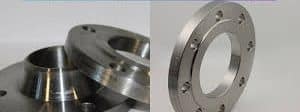
In a slight hug of details related to industrial piping systems structure, having chosen flanges, one contributes to efficiency, reliability, and safety. Among the countless of options available, two primary contender stand out: counter flanges likewise are additional features that can be found in my product line and they are added as improved measure to strengthen the flanges. On the other hand, both of them are essential part of the piping or control device though they’re made in different ways, and they differ in material construction and in some way also in advantage.
In this writing attempt the different uses and of forged flanges and plate flanges and their strengths as well as shortcomings will be explored with the emphasis on the considerations for flange selection and scope. One can grasp peculiarities in different flanges, like line and socket flanges, and engineers, manufacturers, and project owners can then act rationally within the ranges set by their piping systems.
Wood shedding on this route with us, we will explore the hidden delights behind both forged and plate flanges, taking a sneak peak on their structure, properties, and uses. This exploration will come to an end with you as a prime beneficiary having gained the knowledge to make the appropriate flange decision for your pipe system, guaranteeing the necessary success, durability and protection.
The product range of flanges comprises of two common types of flanges, i.e. the forged flange and the plate flange, both featuring unique benefits and applications.
Manufacturing Process:
Forged Flanges: Forged flanges using the metal heating-up process under the pressure from the forging machines is their production approach. This procedure gives us a fast and sturdy metal product.
Plate Flanges: For plate flanges, the plates are generally cut from steel and in-turn machined into their desired dimensions. They usually are thinner as compared to the flanges which are generally forged.
Strength:
Forged Flanges: Consequently, forging process leads to the existence of high strength and endurance among forged flanges. They have the strength to tolerate more pressure and working hard.
Plate Flanges: Plate flanges have a lower overall strength compared to spun flanges, especially when it comes to high pressure and stress loading.
Cost:
Forged Flanges: Tendering, generally, the faked flanges are more expensive than the original ones because they need more labor input.
Plate Flanges: Flange plates are generally a cheaper option owing to the fact that they are easy to produce, in comparison to the sinuous flanges.
Applications:
Forged Flanges: Mainly they are commended for such industries as oil and gas, petrochemical or power generation ones, where high temperature and pressure are present.
Plate Flanges: Plate closures used in low-pressure, low temperature applications can be seen, for example in water supply systems, heating, ventilation and air-conditioning systems (HVAC).
Thickness:
Forged Flanges: They possess a thicker profile compared to plate flanges, which exploits their greater strength.
Plate Flanges: Plates often have notches reducing their thickness and adding portability and ease of handling in some applications.
Customization:
Forged Flanges: Rings of forged flanges are conveniently customized if the parameters have to be revised in terms of size, pressure class and material.
Plate Flanges: Also, plate flange customization implies a number of more restrictions compared to the forged flange.
in a few words, we must consider factors like application, pressure, temperature, budget and the required strength as our guide in choosing between forged flanges or plate flanges. As for the high-pressure, high-temperature applications where integrity takes the priority flanges should be forgings, plate flanges being practical for the smaller pressure and temperature purposes where low-cost and manufacturability matter.
- Get link
- X
- Other Apps
.jpg)
.jpg)
Comments
Post a Comment